Albanese’s Second Term Signals Voter Rejection of Trump-Style Politics
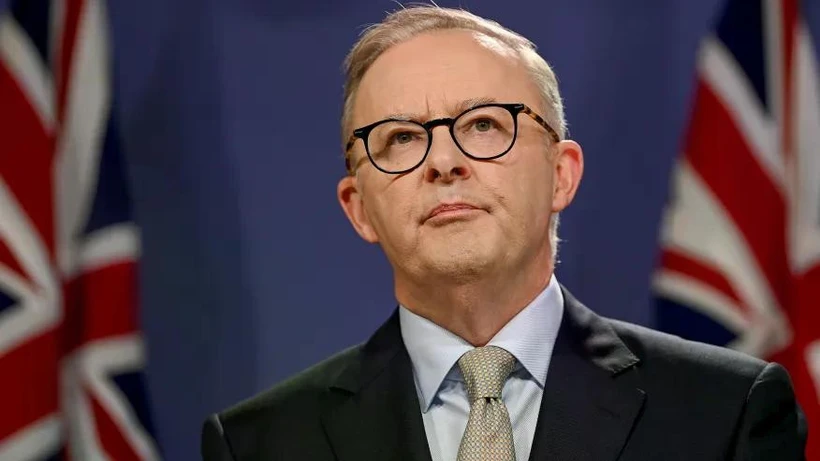
In a historic political victory, Prime Minister Anthony Albanese has won a second term, becoming the first Australian leader in two decades to achieve re-election. His center-left Labor Party defied expectations by securing at least 87 seats in the 150-member lower house, granting him a clear mandate. The triumph came as a blow to the conservative opposition, marking a night of collapse for the Liberal Party and its leader Peter Dutton.
Dutton, who had hoped to emerge victorious, lost his Brisbane seat after more than 20 years in office. Accepting defeat, he acknowledged responsibility for the party’s loss and told supporters that the “Liberal family is hurting.” His defeat parallels that of Canada’s Pierre Poilievre, suggesting that voters across democracies are turning away from conservative platforms influenced by former U.S. President Donald Trump.
Throughout the campaign, Trump’s influence loomed large. Australian voters appeared wary of his global policy unpredictability, especially his abrupt tariffs on allies, including Australia. Albanese positioned himself as a steady, diplomatic alternative, highlighting his firm stance against Trump’s trade threats and emphasizing the importance of reliable international partnerships. He publicly rebuked Trump’s actions, calling them “not the act of a friend.”
On foreign relations, Albanese has been credited with restoring Australia’s image abroad. His government mended ties with China and Pacific nations after years of tension and trade barriers. With Trump’s April 2 “Liberation Day” policy shakeup stirring global unease, Albanese responded assertively, flanked by key ministers. Meanwhile, Dutton faced criticism for aligning too closely with Trumpist rhetoric and for appointing a senator who echoed the slogan, “make Australia great again.”
Despite criticism for being slow to act on domestic inflation and the cost-of-living crisis, Albanese has promised broad reforms in his second term. These include tax cuts, cheaper prescription medicines, reduced home deposits for first-time buyers, and a major public housing initiative to build 1.2 million homes. Analysts say these policies helped solidify his image as a pragmatic, solutions-focused leader.
Albanese originally rose to power in the “climate election” of 2022, pledging carbon cuts and a shift to renewable energy. His administration has since launched enough clean energy projects to power 10 million homes. However, environmental groups have accused the government of undermining its own goals by continuing to approve new fossil fuel projects, prompting demands for greater climate integrity.
In his post-election speech, Albanese recommitted to environmental action and called on Australians to embrace renewable energy as both an ecological and economic opportunity. “This is our moment,” he told cheering supporters, contrasting his green vision with the U.S. administration’s rollback of environmental regulations under Trump’s influence.
The Liberal Party’s loss also halts Dutton’s controversial plan to build seven nuclear plants at taxpayers’ expense. Greenpeace Australia Pacific celebrated the result, saying voters had decisively rejected a “Trumpist agenda” that included climate negligence and dangerous energy experiments. As Australia looks ahead, the message from voters appears clear: stability, climate action, and global cooperation matter more than ideological imitation.
What's Your Reaction?